
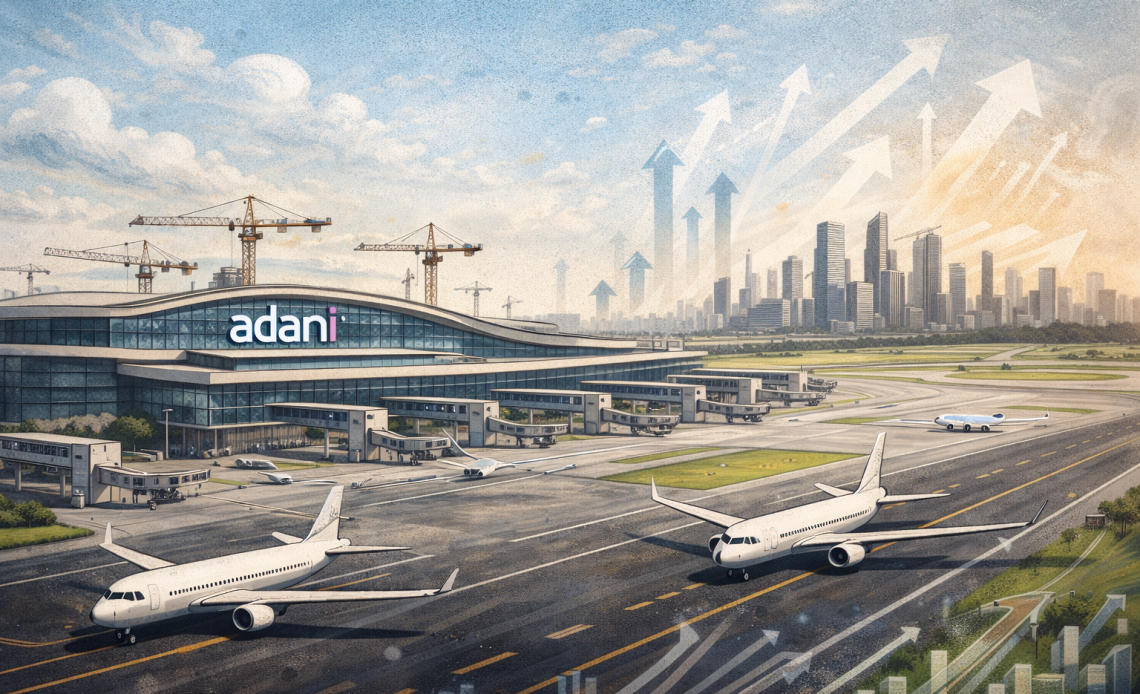
Billionaire Gautam Adani’s conglomerate plans to invest more than $11 billion in its airports business by the end of the decade, as it looks to expand its footprint across India’s aviation sector, bid for new privatized airports, and diversify into aircraft maintenance and related services.
The investment push comes as the group seeks to strengthen its balance sheet and rebuild investor confidence after recent scrutiny.
Jeet Adani, director at Adani Airport Holdings Ltd., said the company will spend about 1 trillion rupees ($11.1 billion) on airport terminals, runways, aircraft-handling facilities and passenger amenities by 2030.
He spoke in an interview at the group’s new airport outside Mumbai.
Expansion and privatization opportunities
Adani Airport Holdings currently operates seven airports, including major hubs in Mumbai and Ahmedabad, and is targeting 11 more airports slated for privatization by the Indian government.
Jeet Adani said the company intends to participate in bids as the government packages loss-making airports together with profitable ones to attract private investment.
Potential targets include airports in Varanasi, Bhubaneswar, and Amritsar, although final allocations will depend on the structure of the privatization process.
The expansion would significantly deepen Adani’s presence in India’s fast-growing aviation market, which has seen strong passenger growth driven by rising incomes and improved connectivity.
The centerpiece of this strategy is Navi Mumbai International Airport, which is scheduled to open on December 25.
The first phase of the project represents a 200 billion rupee investment and will have the capacity to handle 20 million passengers a year.
A second phase is planned, involving a further 300 billion rupees of investment.
Navi Mumbai airport and commercial ambitions
Beyond aviation infrastructure, Adani is positioning the new Mumbai airport as a broader commercial hub.
By 2030, the site is expected to include a 50 billion rupee “Aero City” featuring 20 hotels and a monorail connection.
The airport will also introduce a real-time baggage tracking system, allowing passengers to follow their luggage digitally.
Jeet Adani said the airport’s retail and food offering will range from low-cost local snacks to premium dining options, underscoring the group’s plans to cater to a wide spectrum of travelers.
He added that the airports unit is currently EBITDA positive but has yet to turn cash-flow positive, a milestone he expects within the next three years.
Achieving financial self-sustainability, along with the successful operation of Navi Mumbai airport and completion of surrounding commercial development, are among the conditions for a planned initial public offering.
IPO plans and aviation services push
Adani Airport Holdings is preparing for an IPO by the year ending March 2028, likely through a demerger from its parent, Adani Enterprises Ltd.
Jeet Adani said he believes a demerger would unlock greater value for shareholders, and that the group is open to bringing in a strategic investor ahead of the listing, though no formal discussions are underway.
The group is also expanding into aviation services. It plans to bid for state-owned AI Engineering Services Ltd. to enter heavy aircraft maintenance and engine overhaul work, much of which is currently outsourced overseas.
Aircraft engineering would sit under Adani Defence, while ground handling would be developed organically.
The expansion comes as the Adani Group continues efforts to reduce debt and attract new investors following allegations by Hindenburg Research in 2023 and a US Department of Justice indictment last year, both of which the group has denied.
The post Adani Group plans $11B investment in airports, eyes IPO by 2028 appeared first on Invezz